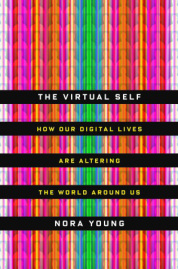
Today we continue our chat with CBC Spark host Nora Young about her book The Virtual Self: How Our Digital Lives Are Altering the World Around Us. If you missed part one yesterday, go ahead and check that out. Otherwise, read on:
 In your book, you also touch on copyright issues. Content owners are cracking down on privacy yet individuals have to accept terms of service agreements without any input. Is there an imbalance forming between corporate and individual rights?
In terms of service agreements in particular, I spoke to Ian Kerr at the University of Ottawa about some of the issues that come out of this and it’s mostly his observation that we have this standard form contract where you click “I agree.” Obviously it’s not practical for you to negotiate your own separate contract between you and Facebook, there’s a reason for why we have these things, and yet when we’re dealing with our data, this is really quite new.
If we had been born digital and none of those external things like terms of service agreements were in existence, we probably wouldn’t be thinking about negotiating those relationships in the way that we currently do. Again, one of the things that people who know a lot more about this stuff than I do (lawyers and so forth) are thinking about whether we need something like a data bill of rights or whether we need to think in terms of ownership of data and be more rigorous in the governance of who can do what with it.
Obviously in Canada we’re lucky enough to have organizations such as the Office of the Privacy Commissioner who are writing those questions. It seems pretty clear that if we’re going into a situation where theoretically it’s starting to look like our lives are being captured, do we really want to be relying just on these individual terms of service agreements or maybe what we want to say is that we’re the people who have the data, the data belongs to us and we decide when we want to lend it out and make it available to other third parties.
I consider it a completely fair exchange to be on Facebook for free and the quid pro quo is that they get to use my preferences and so on to sell me advertising. That might be a completely legitimate decision for me to make. But right now, what seems to be happening is that we have all of this personal data that we’re creating that’s kind of separated into all these different companies with which we have a relationship, which are governed by these terms of service agreements that are difficult to understand. They don’t really give us the power to control our data or bring it all together in one place. As we start thinking about whether this information has value, maybe we need to recalibrate that relationship. Read the rest of this entry »