RSS

Category Archives: movies

Intellectual property is killing the story star

I don’t mean to get off on a rant here… okay, who am I kidding? Of course I mean to get off on a rant (with apologies to Dennis Miller). And this one’s about The Hunger Games.

See you in the reruns.

I wasn’t planning on seeing the movie, on account of how the entire Twilight phenomenon has made me averse to anything related to the “young adult” genre. But, because I see a lot of movies and because I voluntarily let Metacritic dictate most of what I see and because The Hunger Games scored relatively well there, I figured what the hell.

Truth be told, it’s pretty good. If you’re not familiar with the basic premise, the film is set in a dystopian future after a big civil war. The land is divided into districts, each of which must provide one boy and one girl as “tributes,” to compete in the eponymous Hunger Games, or a big annual battle-to-the-death/survival contest. Twenty-four people enter, one person leaves.

I liked a lot of things about the movie. Although it was set in a technologically advanced place, it was subtly done. The Hunger Games is more about a solid science-fiction premise than it is about beating the viewer over the head with special effects. As such, it has some strong social comments to make – like how television and mass media can change the people involved with it – but again, it’s done subtly. Read the rest of this entry »

 
10 Comments

Posted by on April 3, 2012 in media, movies


TIFF has no monopoly on obscure movies

Yesterday’s post about the Toronto International Film Festival caused quite a stir, with people either loving or hating my argument that the event isn’t for movie fans. In case you missed it, here’s the quick and dirty: TIFF requires people to pay inflated prices to wait in long lines to see movies in venues that often aren’t built to show them.

Like all such events, the festival is mainly about business. Whether it’s independent producers hoping to secure a distribution deal, those same distributors looking to build buzz for movies they’ve already secured or the city of Toronto aiming to make itself look cooler, the event is one big financial transaction. While TIFF can’t exist without movie-goers – the people who are subjected to all of the inconveniences above – they are plainly treated as an afterthought.

Some readers didn’t like that characterization and felt the need to justify why they attend TIFF. A few of the arguments, like how the long lineups provide fans with an opportunity to talk movies with their fellow attendees, made sense even though I wouldn’t consider them a worthy tradeoff for all the other issues. But, as they say, to each his own.

One particular excuse, however – that the fest is the only place to see certain rare movies – was a load of hooey.

It’s not the 1950s anymore. If a creator can’t secure a top-shelf distributor for his or her work, there are many options. Indeed, there has never been more choice. Film makers today can sell or give away their movies through a variety of outlets, including iTunes, Netflix (which is almost tailor made for films that nobody else seems to want), YouTube or their own websites. They can even have their films “pirated” through file-sharing, but more on that in a second.

Why would anyone want to do any of that? Obviously, putting a film out on the internet for cheap or for free isn’t going to result in the sort of riches that scoring the distribution services of an Alliance-Atlantis or 20th Century Fox might. But, as anyone involved with any film anywhere will attest to, the most important goal behind any movie is to get it seen by people. While film festivals are a good way to do that, they’re no longer the only way of doing so.

It’s the same for virtually every medium. It’s why singers – including the mighty Justin Bieber – put videos on YouTube and it’s why people write for the Huffington Post for free. Exposure is its own form of currency. While a creator may take a bath on a current work, the exposure can and often does translate to dollars on future efforts.

A few readers rankled at my suggestion of using torrents and other file-sharing methods to get hard-to-find movies, because doing so is “piracy” that steals money from the pockets of the creators. Evidently, Hollywood’s attempts at brainwashing people against file-sharing are working because there are many creators – myself included – who find nothing wrong with their work being traded about for free. Why? Again, because it results in exposure.

Documentary director Sam Bozzo discussed this last year. As he told TorrentFreak:

The only films that are hurt by torrent sharing are mediocre and bad films. In contrast, the good films of any genre only benefit from file-sharing. Due to this, I feel the current file-sharing trend is a catalyst for a true evolution in filmmaking.

Furthermore, Bozzo contacted the person who had uploaded his film Blue Gold and asked if she could help spread the word about it and solicit donations on his behalf.

I received many donations and emails of support from those who downloaded the film, but I furthermore believe that viewers spread the word of the film to their non-torrent-downloading friends and that DVD sales increased due to the leak. For me, the torrent leak was ultimately “free advertising”, and I am the only truly independent documentary filmmaker I know making his money back this year.

There are, of course, many who disagree with him, including the people behind the Oscar-winning Hurt Locker, who are now apparently bringing lawsuits against file-sharers to Canada. That’s their prerogative, as is the right to believe that all file-sharing is piracy, although I’m of the belief that it isn’t if the creator doesn’t think it is.

While there are some valid reasons for why people like going to TIFF despite all the hassles, its monopoly on good obscure movies isn’t realistically one of them anymore. To paraphrase Bozzo, good films will end up being seen and their creators will benefit one way or another, which means some TIFF aficionados will have to think of new justifications for subjecting themselves to its many inconveniences.

 
2 Comments

Posted by on September 13, 2011 in bittorrent, movies


Why the Toronto International Film Festival sucks

We’re in the midst of the Toronto International Film Festival, which means a good number of our city’s inhabitants and media are agog in what can only be described as starfucking. Excuse the vulgarity, but it really is the only way to describe it. Our alt weekly The Grid seems to agree, yet it obviously isn’t as willing to go as far in describing it as such. Nevertheless, TIFF’s continued growth means the starfucking is only getting more institutionalized every year.

Speaking of which, if you’re a movie fan, TIFF isn’t for you. Yes, the fest is important for film makers looking to score distributors for their creations and it also presumably brings Toronto some tourist dollars and possibly some cred in its effort be considered a “world-class” city. But for the plain old movie aficionado, it really sucks.

I’ve lived in Toronto almost all my life and, despite being a film nut, I’d always avoided TIFF for some unknown reason. There was something about the event that just didn’t appeal to me.

Over the past few years, however, I’ve given in and checked out a few screenings. Given the experience, I now know my intuitive aversion was correct.

For one thing, getting tickets is a ridiculous ordeal. Last year, I bought tickets online to Fubar 2, the sequel to perhaps the best Canadian comedy ever made (next to Porky’s, of course). I was shocked to discover that I then had to go down to the TIFF ticket office and stand in line for an hour to pick them up. Exactly what was the point of buying them online?

The setup makes as little sense as Cineplex’s useless mobile app, which also lets you buy tickets on your phone that you then have to print out at a kiosk at the theatre. Canadian film exhibitors of all stripes obviously aren’t getting the point of the internet. How about an electronic ticket complete with barcode that is scanned at the theatre entrance?

Indeed, the film fest is all about standing in lines. Once you’ve picked up your tickets, it’s off to the screening where, if you don’t show up at least an hour ahead of time, you’ll end up blocks away from the theatre entrance, with a crappy seat in the last row awaiting you. I remember standing in such a line when I was 10 years old to see Indiana Jones and the Temple of Doom. Movie-going has come a long way since then, but not at TIFF. Lineups are part of the event’s elitist marketing philosophy, the same one practiced by nightclubs, where passersby see the hundreds of schmucks waiting and think, “Ooh, whatever they’re in line for for must be good.” Lineups, apparently, build buzz.

I’ve seen half a dozen TIFF films over the past three years and none have started on time. On Saturday, I had passes to see Fernando Meirelles’ latest pic 360. My fiancee and I dutifully arrived an hour before – the line was already long, but we could actually see the theatre, so we were in good position. The start time came and went, however, but the line did not move. When I asked what the problem was, an usher told me the theatre was having sound issues and that they would start letting us in soon.

We figured that by the time everyone got in and to their seats, and by the time the director and/or stars wrapped up their inevitable introductory speeches, the film would likely start an hour and a half after it was supposed to. Add in two hours or so for the movie and we were looking at nearly five hours of time spent. That’s way too much for a movie, especially when a beautiful, sunny afternoon was beckoning outside. So, we did the sensible thing: we split and went for a stroll instead.

So why do people go to film fest movies? The tickets cost more, there’s lots of waiting and inconvenience and the films usually aren’t shown in venues built to actually screen movies. What do attendees get in return? A chance to see the film a few weeks before its wide release and the ability to boast about being in the same room as their favourite celebrity.

Yeesh. No thanks. I’ll wait to see the movies at decent prices in real theatres where they start on time. The starfuckers can keep their festival.

 
19 Comments

Posted by on September 12, 2011 in movies


Lessons from Hollywood on vertical integration

I was working on something related to movies the other day and came across an interesting slice of history I was not aware of that could have some bearing on a particularly contentious debate going on today. Last week, I wrote about how regulators should go ahead and allow free reign to so-called vertical integration, where large internet and telecom companies also own broadcasters. In Canada, the CRTC is in the midst of hearings on whether such a situation could turn anti-competitive.

My argument was to let ‘er rip – as long as consumers have fair access to the internet and a good chunk of monthly data usage, there will be tons of competitive options that will keep the vertically integrated companies from abusing their customers.

However, it does appear we’ve been on this ride before. Back in the 1940s, the U.S. courts struggled with a similar situation. Under the so-called studio system, Hollywood itself was thoroughly integrated for much of the first half of the 20th century. The likes of Warner Bros. and Paramount not only produced films, they also owned the theatre chains that showed them.

Theatres were thus required to take part in a process called block booking, where they had to purchase a bunch of crappy movies if they wanted the good ones. Not only that – they also had to buy a lot of these movies without first seeing them.

The parallels to today are obvious. In the first instance, television subscribers today commonly have to get a bunch of channels they couldn’t care less about in order to view the ones they actually do want. Many viewers would prefer to get their channels a la carte, where they only have to pay for the ones they want. Of course, many poorly viewed channels would go under if this scheme were put into effect. Once again, I say let ‘er rip – but that’s a debate for another time.

The more important parallel is that of the vertical integration. While the two situations – of yesterday and today – are not exactly alike, the similarity in both  is that the content owners also control the means of distribution.

The studio system was eventually smashed, first by the Paramount decision, which forced that studio to limit its block booking, and then by Howard Hughes who was the first to split off theatres from his RKO studio.

This structural separation, a term that is increasingly getting tossed around these days in regards to telecom companies, took a huge toll on Hollywood’s profits. Actors were laid off and fewer films were produced, but the industry of course recovered as it settled into a newly competitive paradigm.

While the court’s antitrust moves were probably wise at the time, they may not have been necessary in hindsight because of the inevitable encroachment of technology. The court cases started in the 1930s, when no one could have predicted what the arrival of television in the late 1940s and early 1950s would eventually mean. Indeed, television caused movie attendance to plummet and took almost as big a chunk out of Hollywood’s revenue as the end of the studio system.

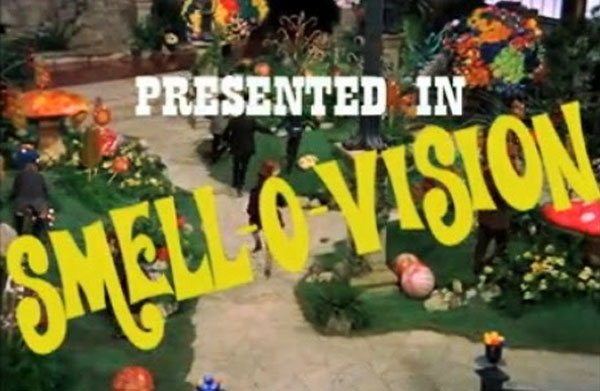
Studios were thus forced to compete, which is when they came up with their own new technologies, such as widescreen movies, 3D and, of course, Smell-O-Vision.

That’s where the big difference is between yesterday’s film integration and today’s telecom/broadcast situation. While courts and regulators couldn’t see that technology would eventually make their interference unnecessary, today it’s already very obvious, which is another reason to allow vertical integration to go ahead unhindered.

 
5 Comments

Posted by on June 29, 2011 in movies, telecommunications


Mobile movie tickets still not really here

If you’re a film buff like me, you’re probably always hunting for good apps that help make the movie-going and viewing experience more enjoyable. The first two apps I usually install on any device I come across are therefore Flixster and IMDB.

Flixster is great because it uses a phone’s GPS to locate nearby theatres and then displays showtimes. You can save your favourite theatres, watch trailers and even read reviews. IMDB, meanwhile, is the portable version of the Internet Movie Database website, and it’s integral to solving drunken arguments in bars over trivia, i.e. “The mother from Modern Family was the female lead in Happy Gilmore? No way, you’re an idiot! [Looking it up on IMDB] Oh… wait, you’re right.”

I was thus disappointed the other day when I tried to use Cineplex’s app to buy tickets in advance for a movie.

Here’s the story: I go to the movies once or twice a week, so I know the drill well. If you go on opening weekend, it’s wise to get there early, especially if it’s a big blockbuster-type flick. Usually an hour will do. I rarely stand in the human cashier line, since buying tickets at the automated kiosks is usually much faster (and makes one feel less like cattle). This way, I’m in the theatre at least half an hour before showtime, which is enough to get a decent seat. I often chuckle at the people who show up five minutes before and are forced to leave because the only seats left are in the front row. Clearly they’re rookies who don’t go to the movies very often.

The fact is, if you’re not there at least 30 minutes before you’ll find the movie either sold out or there won’t be any good seats left. I’ve written before about how this could be solved with the assigned seating system that’s common in other parts of the world, but that would run counter to theatres’ chains interest in packing people in early. The earlier people come to the theatre, the more advertising they can be sold.

Now then – what if you could get your ticket ahead of time? If you didn’t have to stand in line, even the shorter one for the automated kiosks, that could shave a good 20 to 30 minutes off how early you need to get to the theatre. That is, of course, the thinking behind buying tickets online and printing them off at home, to be scanned by the ushers at the theatre.

But what about those of us who are deathly opposed to printing anything? Well, that’s where the mobile app should come into play.

Cineplex, Canada’s main movie chain, launched its mobile app back in November, which allows smartphone users to do just that – they can buy tickets from anywhere and don’t necessarily have to be at home to do it.

Hold on, though, there’s a big problem – the app either sends you a ticket, which must then be printed out, or you have to pick it up at one of the automated kiosks. What the app doesn’t do is provide some sort of mobile ticket that can be scanned by ushers right off the phone.

That seems to defeat the purpose. If you have to print at home or stand in line at the theatre, the app seems kind of useless, doesn’t it? Even airlines have figured this out: Air Canada, for example, sends customers an e-ticket that can then be scanned in at the airport gate right from the phone.

I was perplexed, so I spoke to one of Cineplex’s PR folks. He explained that the problem lies in security; there’s currently no way to prevent abuse of such a system. If there was a scannable phone e-ticket, people could simply pass the phone back and forth to each other and sneak their friends into the theatre. I wondered if there were some sort of low-tech solution that could be paired with the e-ticket, such as the customer having to present identification along with it, but that’s apparently not practical for staff to handle at busy times. This is where an airline, where security is often tight, has an advantage over a movie theatre.

Cineplex is working on a solution that is near completion, I’m told. Still, as one person pointed out on Twitter, this current high-tech problem doesn’t seem any different from the age-old low-tech re-entry problem. What’s to stop a group of people from entering the theatre with paper tickets, then one person going outside and passing those tickets to other friends who then get in for free? It seems to be the same thing.

As it stands, the current app only really guarantees that you get a ticket. Whether that ticket translates into a decent seat still often depends on how early you get to the theatre.

Here’s hoping Cineplex figures out its security issue so those of us who love going to the theatre can get truly mobile tickets and thereby save ourselves some time.

 
4 Comments

Posted by on June 21, 2011 in apple, Google, movies


Follow

Get every new post delivered to your Inbox.

Join 4,132 other followers